
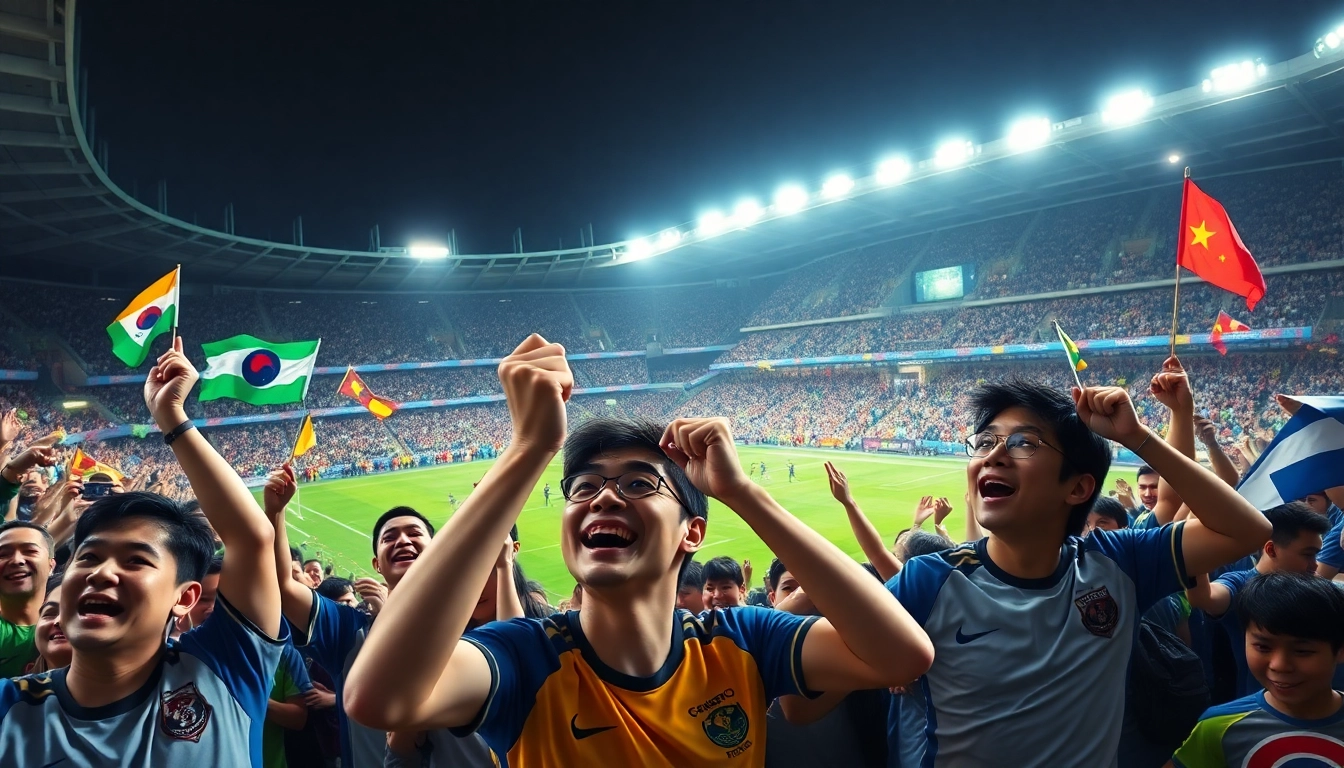
Overview of Giải Vô Địch Quốc Gia Hàn Quốc
The Giải Vô Địch Quốc Gia Hàn Quốc, commonly known as K-League 1, holds a prominent position in the landscape of Asian football. Established as the top-tier professional football league in South Korea, it features a competitive structure that showcases the country’s premier clubs. Every year, the league commences in March and concludes in November, bringing together 12 of the country’s most skilled teams. This prestigious tournament not only captivates local fans but also garners significant attention from football enthusiasts across Asia. When exploring options, Giải Vô Địch Quốc Gia Hàn Quốc provides comprehensive insights into its structure and dynamics.
History and Evolution of K-League 1
The history of K-League 1 is rich and complex, beginning with its inception in 1983 as the Korean Super League. Over the decades, the league has transformed significantly, adopting various formats to improve competitiveness and fan engagement. A significant change occurred in 2011 when the league introduced a promotion and relegation system, which became effective in the 2012 season. This move aimed to enhance the level of competition by allowing underperforming teams to be relegated to a lower division, subsequently giving way for more skilled teams to join the league.
In 2013, the league underwent another transformation, implementing a split-season format similar to the Scottish Premiership, which created two separate groups competing for the championship and a relegation playoff. Such changes have attracted stronger teams and improved the overall quality of play, making K-League 1 one of the most respected leagues in Asia.
Current Format and Structure of the League
Today, K-League 1 consists of 12 teams that compete in a round-robin format, where each team plays against every other team twice, once at home and once away. The league operates with a points system, where teams earn three points for a victory, one point for a draw, and no points for a loss. The top teams at the end of the season engage in a playoff to determine the champion, while the lowest-ranking teams face relegation.
Key Teams and Their Achievements
Several clubs have made remarkable contributions to the history of K-League 1. Jeonbuk Hyundai Motors stands out as a dominant force, claiming multiple championships and establishing a reputation as a powerhouse in Korean football. Other notable clubs include Ulsan Hyundai, FC Seoul, and Suwon Samsung Bluewings, each with their unique history and passionate fan bases. Over the years, these teams have not only excelled in domestic competitions but also represented South Korea in international tournaments, further enhancing the league’s prestige.
Understanding the League’s Competitive Dynamics
Analyzing Team Performance Metrics
Analyzing team performance metrics is crucial for understanding the competitive landscape of K-League 1. Teams are evaluated on various aspects, including points earned, goals scored, and defensive records. Additionally, advanced metrics such as possession rates, passing accuracy, and player statistics provide deeper insights into each team’s playing style and effectiveness on the pitch.
Historically, teams like Jeonbuk and Ulsan have maintained high performance levels, often showcasing superior tactical awareness and physical fitness compared to their competitors. According to recent analyses, team efficiency in converting goal opportunities significantly impacts match outcomes, making goal-scoring ability a key performance indicator.
Impact of Transfers and Injuries on Match Outcomes
Player transfers and injuries play a pivotal role in shaping the dynamics of the K-League 1. The transfer market in South Korea is competitive, with clubs seeking to strengthen their rosters through strategic acquisitions. The arrival of marquee players can greatly enhance a team’s competitive edge, while injuries to key players can severely hinder a team’s performance.
For instance, if a club loses its main striker due to injury, it may struggle to find the back of the net, leading to poor results. Consequently, fans and analysts closely monitor player health and the impact of transfers leading up to the matchday to make informed predictions.
Home vs. Away Game Performance
A team’s performance can significantly differ between home and away matches in K-League 1. Home teams often enjoy a psychological advantage, supported by local fans, familiar playing conditions, and reduced travel fatigue. This advantage is quantified through statistical analyses revealing that home teams generally win a higher percentage of their matches compared to their away counterparts.
Conversely, some away teams excel in counter-attacking football, leveraging the space available in the opponent’s home ground. Understanding these dynamics is essential for predicting match outcomes and making educated bets.
Betting Strategies for K-League 1
Key Metrics for Making Informed Bets
When it comes to betting on K-League 1, having a solid understanding of key metrics is vital. Bettors should focus on team form, historical head-to-head performance, and player availability. Analyzing the last five to ten games of a team provides crucial insights into their current form, while historical data regarding head-to-head matchups can reveal patterns that may influence betting decisions.
Moreover, the impact of home advantage, player injuries, and the significance of upcoming matches can also sway betting odds and expectations. Ultimately, bettors who integrate these metrics into their analysis will enhance their chances of successful wagers.
Analyzing Historical Trends and Statistics
Analyzing historical trends is another effective strategy for bettors. By examining data from previous seasons, key insights into team performance over time can be gleaned. Trends such as a team’s tendency to score or concede goals, performance in specific weather conditions, or patterns in results after mid-week games provide valuable information.
For example, teams that frequently win after a loss tend to have a recovery trait that can influence betting odds. By identifying these trends, bettors can better gauge the likely outcomes of future fixtures, enabling more strategic betting.
Utilizing Expert Predictions and Insights
In addition to personal analysis, leveraging expert opinions and predictions can be beneficial. Many analysts provide insights into team tactics, player conditions, and match previews, which can offer a broader perspective on upcoming games. Engaging with these expert analyses can complement individual betting strategies and potentially lead to more informed decisions.
Fan Engagement and Community Impact
Importance of Fan Support in the K-League
Fan engagement is a critical aspect of K-League 1, contributing significantly to the league’s vibrancy and atmosphere. The passionate support from fans not only boosts team morale but also enhances the overall experience of the matches. Clubs often leverage this support through community outreach programs and fan engagement activities, creating a loyal fan base that is vital for the league’s sustainability.
Events and Activities Surrounding the League
Throughout the season, various events and activities are organized to engage fans and promote the league. From fan fests and meet-and-greet sessions with players to competitions and community service initiatives, these efforts help reinforce the bond between clubs and supporters. Special themed matches or events around holidays also attract larger crowds and media attention.
The Role of Social Media in Fan Interaction
Social media has become indispensable in enhancing fan interaction within the K-League 1. Clubs utilize platforms like Twitter, Instagram, and Facebook to communicate with fans, share live updates, and promote events. This direct line of communication fosters a community feel and allows fans to express their opinions and support for their teams in real-time.
Additionally, social media campaigns around player signings, match previews, and highlights have not only increased engagement but also helped in attracting a global audience to K-League matches.
Future Trends in South Korean Soccer
Emerging Talents in K-League 1
The future of South Korean soccer looks promising, with numerous emerging talents competing in K-League 1. Young players from various clubs are increasingly making their mark, showcasing skill and potential that heralds a bright future for the league. Clubs are investing in youth academies and scouting to ensure a steady influx of new talent, which is essential for maintaining high competition levels.
Predictions for the 2026 Season and Beyond
As the 2026 season approaches, experts predict continued growth for K-League 1, both in terms of quality and viewer engagement. The potential for new teams entering the league, along with advancements in broadcasting and digital engagement, hints at an expanded audience both domestically and internationally.
Furthermore, innovations in match analysis and performance metrics may enhance the overall quality of play, providing teams with comprehensive data to refine their strategies and improve outcomes.
Potential Changes to League Structure or Rules
With the evolving dynamics of football globally, potential changes to K-League 1’s structure and rules may arise. Discussions about formats, playoff systems, and even potential expansion of the league are ongoing. Such changes could help enhance competitiveness and adapt to the shifting landscape of international football.
Ultimately, the Giải Vô Địch Quốc Gia Hàn Quốc is poised for a bright future, with its rich history, dedicated fan base, and evolving landscape making it a cornerstone of Asian football.